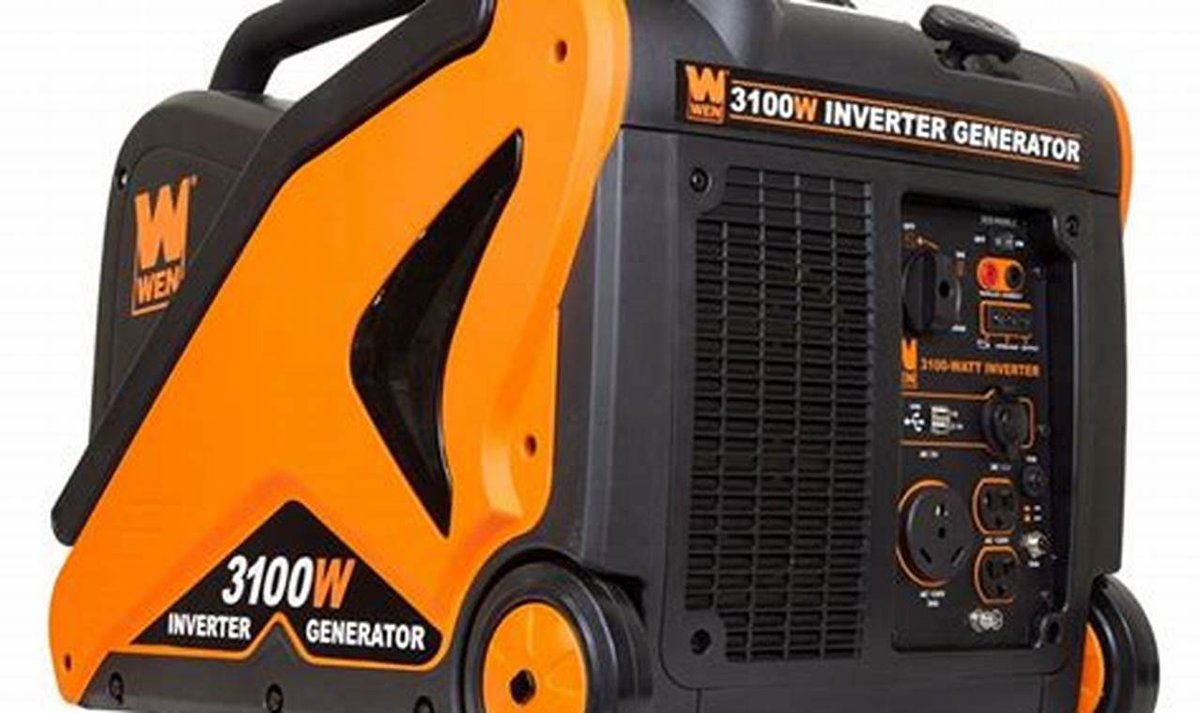
When the lights go out, or adventure calls you off-grid, a reliable generator can be your best friend. But let's be honest: traditional portable generators often sound like a jet engine warming up in your backyard. That's where Top-Rated Super Quiet Inverter Generators: Reviews & Comparisons come into play, offering a much-needed breath of fresh, quiet air. Imagine powering your essentials without drowning out conversation or disturbing the peace of your campsite.
Inverter generators have revolutionized portable power, delivering clean, stable electricity with significantly less noise and better fuel efficiency than their conventional counterparts. They’re compact, smart, and increasingly a non-negotiable for anyone who values peace and quiet alongside dependable power. We've put the best models through their paces to help you make an informed decision, examining everything from their decibel levels to their ability to run your entire fridge.
At a Glance: Your Quick Guide to Quiet Power
- What are Inverter Generators? They're compact, computer-controlled generators that adjust engine speed to the load, making them quieter and more fuel-efficient.
- How Quiet is "Quiet"? Look for models in the 50-60 dB range—that's comparable to a normal conversation or a running dishwasher.
- Wattage Matters: 1,000-1,600W for camping, 2,000W+ for home essentials, 3,000W+ for running multiple items concurrently.
- Solar Alternatives: Silent and eco-friendly, but typically offer less power and rely on charging time.
- Key Features to Look For: Dual-fuel capability, CO safety shutoff, parallel ready, electric start, and intuitive displays.
- Safety First: Always run fuel-powered generators outdoors, at least 20 feet from dwellings, and never unmonitored.
What Makes an Inverter Generator So Quiet?
The secret to an inverter generator's hushed operation lies in its sophisticated technology. Unlike conventional generators that run at a constant, high RPM regardless of the power demand, inverter models feature a computer-controlled engine that self-regulates its speed.
Think of it like this: your car's engine doesn't constantly redline when you're cruising on a highway. It adjusts to the speed and load. Similarly, an inverter generator ramps up only as much as needed to meet the power requirements of your devices. If you're just charging a phone, it purrs gently. If you plug in a refrigerator, it revs up a bit, then settles back down. This prevents wasted energy, conserves fuel, and significantly reduces noise. Add to that advanced mufflers and often enclosed designs, and you get a machine that won't make you shout to be heard.
Why Opt for a Quiet Inverter Generator?
Beyond the obvious benefit of silence, choosing an inverter generator comes with a host of advantages that make them a smarter investment for many users.
Firstly, their noise levels are a game-changer. A conventional generator can easily hit 70-80 dB or more, which is like standing next to a running vacuum cleaner or a busy street. An inverter generator typically operates between 50-60 dB—a range comparable to normal conversation (60 dB) or a running dishwasher. This makes them ideal for campsites where noise restrictions are common, residential areas during power outages, or job sites where communication is crucial.
Secondly, they deliver cleaner power. The "inverter" technology converts raw AC power into DC, then inverts it back to clean AC power. This produces a "pure sine wave" output, which is crucial for safely running sensitive electronics like laptops, smartphones, and medical equipment without the risk of damage from power surges or fluctuations. Conventional generators often produce "dirty" power with inconsistent voltage.
Thirdly, they are remarkably fuel-efficient. Because the engine speed adjusts to the load, inverter generators consume less fuel when running at lower capacities. This means longer run times on a single tank of gas, saving you money and reducing the frequency of refueling.
Finally, their compact and lightweight design makes them far more portable. While generally more expensive upfront, the blend of quiet operation, efficiency, and clean power delivery makes them an unparalleled choice for modern power needs. If you're weighing your options, our comprehensive generator buying guide might offer further insights into different types and their applications: our comprehensive generator buying guide.
Decoding Wattage: How Much Power Do You Really Need?
Understanding wattage is critical to choosing the right generator. Get too little, and your appliances won't run. Get too much, and you've overspent on unnecessary capacity. Wattage measures power output, and higher numbers mean more power.
- 1,000-1,600 watts: These smaller, highly portable units are perfect for light-duty applications. Think camping trips where you need to charge phones, run a few lights, or power a small fan. They can also handle minor jobsite tasks for small power tools.
- 2,000+ watts: Step up to this range for more substantial home backup needs. A 2,000-watt generator can typically power essentials like a refrigerator, a few lights, and charge devices. If you're looking to keep your perishables cold during an outage, this is a good starting point.
- 3,000+ watts: When you need to run several items concurrently—perhaps a refrigerator, a few lights, a TV, and even a small oven or window AC unit—you'll want a generator in this power class. These offer the versatility for more comprehensive home backup or for powering larger RVs and extensive jobsite tools.
To precisely determine your needs, check the labels on your devices for their specific watt requirements (both starting/surge watts and running watts). This will help you choose a generator that can handle both the initial surge when an appliance kicks on and its continuous operation. For a deeper dive into this calculation, you might find our guide on how to calculate your exact wattage needs helpful.
Understanding Generator Noise Levels
Decibels (dB) are the universal measurement for sound intensity, and when it comes to generators, a lower number means a quieter experience. While any generator will produce some noise, inverter technology has drastically lowered the bar for what's considered acceptable.
- 20 dB: A gentle whisper or a ticking watch. You won't find a fuel-powered generator this quiet.
- 50-60 dB: This is the sweet spot for quiet inverter generators. It's comparable to a normal conversation (60 dB), the hum of a running dishwasher, or the ambient noise in a quiet office. These are the generators you can comfortably use without disturbing neighbors or yourself.
- 70 dB: A vacuum cleaner or a busy street. This is where many conventional generators start, and it becomes noticeably intrusive.
- 90 dB: A hair dryer or a lawnmower. Definitely not "quiet."
The difference between 50 dB and 70 dB might not look huge on paper, but the decibel scale is logarithmic. A 10 dB increase actually represents a sound that's perceived as twice as loud. So, a 70 dB generator isn't just a little louder than a 60 dB one; it's significantly more intrusive. Prioritizing models in the 50-60 dB range is key if quiet operation is your top concern.
Solar vs. Fuel-Powered Quiet Generators: The Silent Contender
While fuel-powered inverter generators are exceptional for their low noise, there's an even quieter option for portable power: solar generators, also known as portable power stations. These devices offer a completely silent, emission-free, and eco-friendly alternative.
Solar Generators (Portable Power Stations):
- Silent Operation: Since they run on batteries and have no moving parts (apart from cooling fans, which are usually very quiet), they produce zero operational noise.
- Eco-Friendly: No fossil fuels means no fumes, no carbon emissions, and no reliance on gasoline or propane.
- Energy Efficient: They only expend the power that's used, with minimal standby drain.
- Rechargeable: Charged via solar panels (purchased separately), wall outlets, or car adapters. Many can reach full capacity in 3-4 hours via AC.
- Limitations: Typically produce less continuous power than fuel-powered generators and have a finite battery capacity. Their output is usually measured in watts (for AC appliances) and watt-hours (for battery capacity).
While a fuel-powered inverter generator offers robust power for extended outages or heavy-duty use, a solar generator might be perfect for light camping, charging electronics, or providing backup for essential small appliances where absolute silence and environmental impact are paramount. If you're interested in learning more about these silent powerhouses, explore our guide on portable power stations.
Our Rigorous Testing Process
To bring you the most trustworthy recommendations, our experts dedicated over 83 hours to testing eight best-selling quiet generator models, performing a total of five distinct tests. Our evaluation focused on what truly matters to users:
- Ease of Use: How quickly and easily can you set up, start, and operate the generator? Are controls intuitive?
- Noise Levels: Using precise sound meters, we measured decibel levels under various loads, prioritizing inverter engines running at 60 dB or less, and, of course, noting the inherent silence of solar generators.
- Portability: Assessing weight, the presence of handles or wheels, and overall design for transport and storage.
- Power Output: We meticulously checked if the generators consistently delivered their advertised peak and running watts. Consumer Reports engineers took this a step further, loading models with key appliances like space heaters, refrigerators, and AC units to assess real-world performance under typical household loads.
- Value: We weighed performance and features against the price point to determine which models offer the best bang for your buck.
Beyond these core criteria, we also evaluated how well each generator handled electrical spikes (critical for sensitive electronics), fuel efficiency, and run time under load. Recognizing the critical importance of safety, our experts developed a dedicated CO safety technology test to ensure generators with carbon monoxide detection and emergency shutoff systems performed as expected. This comprehensive approach ensures our top picks aren't just quiet, but reliable, safe, and genuinely useful.
The Top Picks: Super Quiet Inverter Generators We Recommend
After extensive testing and evaluation, here are our top-rated super quiet inverter generators, each excelling in its category.
1. Best Overall: Honda 2200-Watt Inverter Generator With CO-Minder
When you need a generator that checks every box for quiet operation, reliability, and safety, the Honda 2200-Watt Inverter Generator with CO-Minder stands out. It's the gold standard for a reason.
- Specs: 2,200 peak/1,800 running watts, an incredibly quiet 48-57 dB(A), runs on gasoline, features two 125V-20A outlets, and weighs a manageable 47.4 pounds.
- Features: Its whisper-quiet operation is legendary, thanks to the robust Honda GXR120 engine. It's lightweight and compact, making it highly portable. The integrated carbon monoxide detection and emergency shutoff (CO-Minder) provide crucial safety. It’s parallel-ready, allowing you to link it with another Honda EU2200i for double the power, and even compatible with the Honda My Generator mobile app for remote monitoring.
2. Best Bang for the Buck: Pulsar 2200-Watt Dual-Fuel Quiet Inverter Generator
For those seeking maximum versatility and value without breaking the bank, the Pulsar 2200-Watt Dual-Fuel is an unbeatable choice.
- Specs: Offers gasoline: 2,200 peak/1,800 running watts; Propane: 2,000 peak/1,600 running watts. Rated around 60 dB, though our tests sometimes saw it slightly louder under heavier loads. It features a 1.18-gallon fuel tank, two 120V-15A AC outlets, and one USB-A port. At 46.5 pounds, it's very light for its class.
- Features: Its dual-fuel capability is a major advantage, allowing you to switch between gasoline and more shelf-stable propane, ideal for emergencies or remote camping. Its light weight makes it easy to transport, solidifying its position as a top value pick.
3. Best for Camping: Westinghouse iGen4500 Quiet Inverter Generator
Camping often requires a balance of sufficient power and unobtrusive operation, and the Westinghouse iGen4500 delivers on both, especially for RVers or larger group camps.
- Specs: A substantial 4,500 peak/3,700 running watts, with a quiet 52 dB(A) operation. It runs on gasoline from a large 3.4-gallon tank, offering an impressive run time of up to 18 hours. It provides one 120V-30A outlet, two 120V-20A outlets, and two USB-A ports. Weighing 104.7 pounds, it's heavier but comes prepared for transport.
- Features: This generator comes with a convenient remote control, allowing you to start or stop it from inside your tent or RV. Its Eco mode optimizes fuel consumption, extending run time. An extendable handle and wheels make moving this heavier unit surprisingly easy, perfect for setting up camp.
4. Best Solar: Generac GB2000 Portable Power Station
If absolute silence and eco-friendliness are paramount, the Generac GB2000 Portable Power Station is your go-to. It's a true alternative to fuel-powered options.
- Specs: 3,200 peak/1,600 running watts (in AC output), truly silent operation. It charges via AC or solar panels (sold separately). Equipped with three 120V-13.3A AC outlets, one 12V DC port, two USB-A, two USB-C ports, and a wireless charging pad. It weighs 43 pounds, making it highly portable.
- Features: Charges to full capacity in just 3 to 4 hours via an AC outlet. As a power station, it's incredibly energy-efficient, expending only the power used. Its silent operation and lack of emissions make it ideal for indoor use (unlike fuel generators) or noise-restricted areas.
5. Best Bluetooth: Ryobi 2300-Watt Bluetooth Inverter Generator
For those who appreciate modern convenience and smart integration, the Ryobi 2300-Watt Bluetooth Inverter Generator offers excellent functionality at your fingertips.
- Specs: 2,300 peak/1,800 running watts. Its noise level ranges from 57-68 dB(A), depending on load. It runs on gasoline, providing two 120V-20A outlets and two USB-A ports. It weighs 52 pounds.
- Features: The standout feature is its Bluetooth technology, which allows you to monitor power output, fuel levels, and even remotely shut off the generator directly from a mobile app. This level of control adds significant convenience, especially when using the generator from a distance. Plus, it's known for fast and easy assembly right out of the box.
6. Most User-Friendly: Generac iQ3500 Portable Inverter Generator
For ease of use combined with robust power, the Generac iQ3500 Portable Inverter Generator is designed for straightforward operation without compromising on performance.
- Specs: 3,500 peak/3,000 running watts. Our tests showed it running at 56 dB(A) in Eco mode and 61 dB(A) in Normal mode, making it remarkably quiet for its power output. It runs on gasoline, features two 120V-20A AC outlets, one 120V-30A outlet, and two USB-A ports. At 109.1 pounds, it's a heavier unit.
- Features: It boasts an electronic start for quick ignition, with a reliable pull-cord backup in case the battery is low. The Eco-mode option significantly improves fuel economy during lighter loads. An intuitive LCD screen displays vital information like output, remaining run time, and fuel level at a glance. It's also parallel capable for linking with another unit. Note: The 30A outlet (120V L5-30R) may require an adapter for common RV (TT-30P) power cords.
Making Your Choice: Key Factors to Consider
Selecting the perfect quiet inverter generator involves weighing your specific needs against the features and capabilities available. Beyond just noise levels, consider these crucial factors:
Power Output: Matching Watts to Needs
As we discussed, correctly sizing your generator for power output is paramount.
- List Your Essentials: Create a list of every appliance or device you intend to power. Note both their "starting" (surge) watts and "running" (continuous) watts. Starting watts can be 2-3 times higher for motor-driven appliances like refrigerators, pumps, or air conditioners.
- Calculate Total Wattage: Add up the running watts of all items you want to power simultaneously. Then, identify the single item with the highest starting wattage and add that to your total running watts (assuming other items are already running). This gives you your minimum peak watt requirement.
- Buffer for Safety: Always aim for a generator with slightly more wattage than your calculated needs to provide a safety buffer and prevent overloading.
Fuel Type and Capacity: Endurance and Versatility
- Gasoline: The most common fuel type for inverter generators. Tank sizes typically range from 2 to over 10 gallons, directly impacting run time and the physical size of the unit. Larger tanks mean fewer refueling stops but also heavier generators.
- Dual-Fuel Models: These offer the flexibility to run on either gasoline or propane. Propane is cleaner-burning, has a longer shelf life, and can be stored indefinitely, making it a great option for emergency preparedness. However, generators often produce slightly less power on propane.
- Solar Power Stations: As discussed, these are silent and emission-free, relying on internal batteries charged by solar panels or AC outlets. Ideal for low-power needs, sensitive electronics, and situations where noise is absolutely forbidden.
Size and Weight: Portability is Key
Where will you be using and storing your generator?
- Lightweight Portables (40-60 lbs): These units, often with top or side handles, are designed for easy single-person transport. Perfect for car camping, tailgating, or moving around a small job site.
- Heavier Units (up to 100+ lbs): Generators with higher wattage often weigh more. For these, look for models that include a factory-installed wheel kit and an extendable handle to make transport manageable. If it lacks wheels, factor in the cost and effort of adding them.
Additional Features: Smart Conveniences
Modern inverter generators come packed with features that enhance convenience and functionality.
- Load Sharing (Parallel Capability): This allows you to connect two smaller, compatible inverter generators together to effectively double your power output. It’s a flexible solution, letting you use a single generator for light tasks or both for heavier loads.
- Electric Start: A push-button, switch, or even remote control start eliminates the need for manual pull-starting, which is particularly useful in cold weather or for those with limited strength. Always check for a pull-cord backup, just in case.
- Multiple Outlets: Ensure the generator has the right mix of outlets for your needs:
- Household (120V-15A or 20A): Standard three-prong outlets for most appliances.
- RV (120V-30A Twist-Lock or TT-30R): Essential for powering recreational vehicles directly.
- USB Ports: Convenient for charging smartphones, tablets, and other small electronics.
Beyond the Purchase: Essential Safety and Maintenance Tips
Owning a generator means taking responsibility for its safe operation and longevity. Even the quietest inverter generator requires careful handling.
Carbon Monoxide (CO) Safety: A Silent Killer
Carbon monoxide is an odorless, colorless gas produced by fuel-powered generators that can be lethal.
- CO Safety Technology: Most recommended Consumer Reports inverter generators (with the notable exception of one mini Honda model, not reviewed here) now include advanced CO safety technology. This system automatically shuts off the engine if carbon monoxide levels in the surrounding area reach dangerous limits. This feature is a non-negotiable for safety.
- Placement is Critical: Always, always place gasoline generators at least 20 feet away from your house or any other dwelling, including a garage, shed, or carport. The exhaust must be directed away from windows, doors, and vents that could allow CO to seep indoors.
- Never Indoors: Absolutely never run a fuel-powered generator inside a home, garage, basement, or any enclosed or partially enclosed space, even with windows or doors open.
- Monitor and Protect: Never run fuel-powered generators overnight unmonitored. Install battery-operated carbon monoxide detectors with alarms in your home, especially in sleeping areas, to provide an extra layer of protection. For more in-depth information, review our essential carbon monoxide safety tips.
Routine Maintenance for Longevity
Like any engine-driven machine, your generator requires periodic care to ensure reliable performance and a long lifespan.
- Oil Changes: Perform the initial oil change after the first 20 hours of operation to clear out manufacturing debris. Subsequently, change the oil every 100 hours or at least once a year, whichever comes first. Always use the manufacturer-recommended oil type.
- Air Filter Cleaning: Inspect and clean the air filter every 100 hours (or more frequently in dusty conditions). A clogged air filter reduces efficiency and can damage the engine.
- Regular Running: Even if you don't use it often, run your generator for 20-30 minutes every 3 months. This keeps the carburetor from gumming up, lubricates seals, and ensures it's ready when you need it most. Use a fuel stabilizer in the tank if storing for extended periods.
- Spark Plug & Fuel Filter: Check and replace the spark plug and fuel filter as per your owner's manual.
- Storage: When storing your generator for an extended period, drain the fuel tank or add a fuel stabilizer to prevent ethanol-related issues.
Always consult your generator's owner's manual for specific maintenance schedules and instructions. Following these guidelines will ensure your investment in a quiet inverter generator pays off for years to come. For a comprehensive guide to keeping your generator in top shape, check out a detailed maintenance checklist.
Ready for Quiet Power?
Choosing a top-rated super quiet inverter generator means investing in peace of mind, whether it's powering your essential devices during an outage or bringing comfort to your outdoor adventures. You're not just buying a generator; you're buying the freedom to enjoy stable power without the intrusive roar.
By understanding your wattage needs, weighing fuel options, considering portability, and prioritizing safety features like CO-Minder technology, you can confidently select the perfect model for your home, campsite, or job site. Our thorough reviews and comparisons are designed to cut through the noise (pun intended) and equip you with the knowledge to make an informed decision. Now, go forth and power quietly. If you're looking for more general information about all options, don't miss our larger article covering Our super quiet inverter generators.